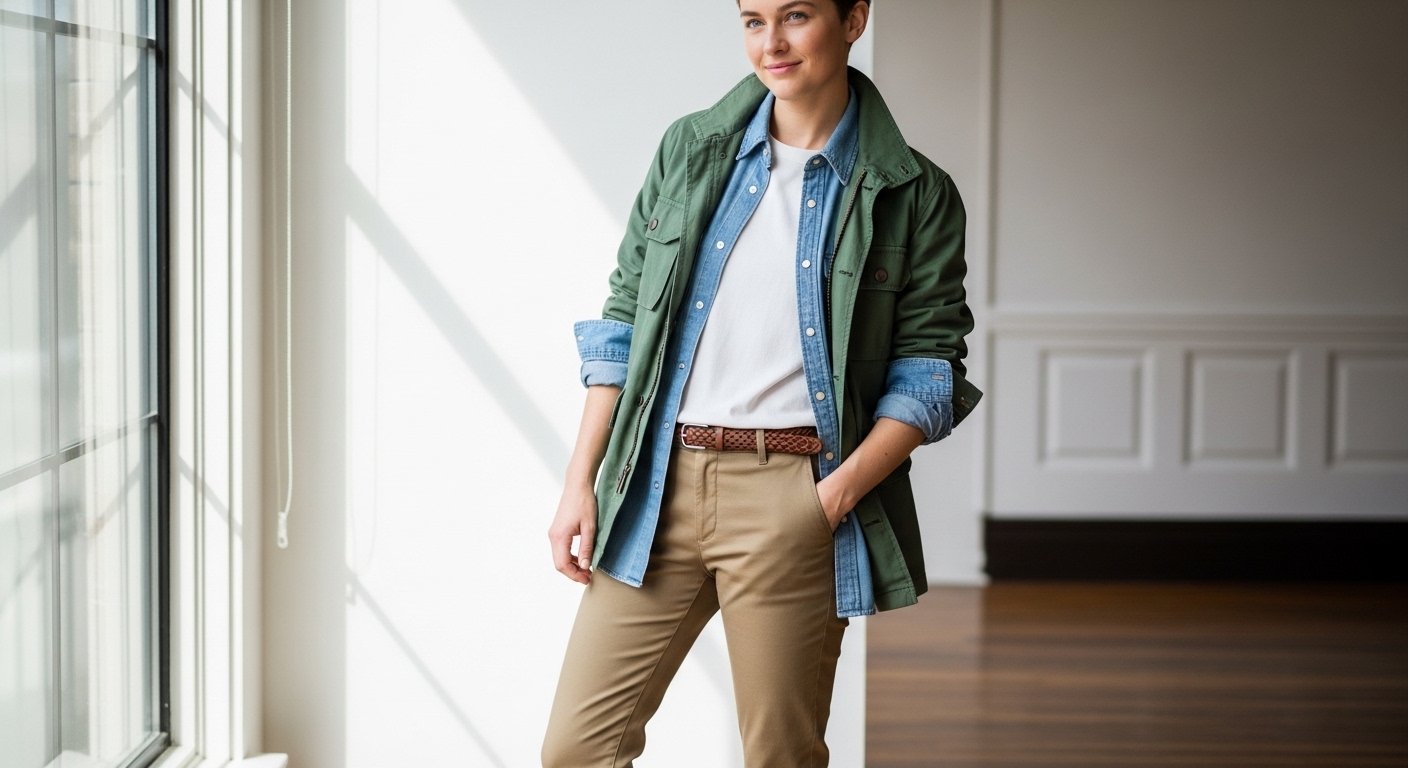
I used to overthink smart casual and end up either underdressed or like I’d stepped into a meeting. I’d layer too much or pick shoes that didn’t match the top half. I learned to stop changing the whole outfit and tweak one thing at a time. These notes come from getting dressed, trying it, and fixing what felt off.
How to Dress Smart Casual For Men Without Looking Overdressed
This is the method I use every time an outfit feels unfinished. I focus on fit, a restrained palette, and one clear formality choice. The result: a clean, intentional look that reads relaxed but put-together—never staged.
What This Solves
I clear the “is this too much?” feeling. I pick one focal level between casual and formal and stick to it. That avoids the mess of blending sneakers with overly structured tailoring.
I also solve the “something’s off” moments by checking proportion and movement. Small fixes—sleeve length, pant break, shoe choice—make the outfit read smart casual instead of overdressed.
What You’ll Need
- Unstructured navy blazer (soft wool blend)
- White Oxford button-down shirt (slim fit)
- Lightweight merino crew sweater (grey)
- Dark slim chinos (stretch cotton)
- Clean white leather sneakers (low-top)
- Brown leather derby shoes (cap-toe)
- Slim leather belt (brown)
- Minimal wristwatch (leather strap)
Step 1: Start with a calm, fitted foundation
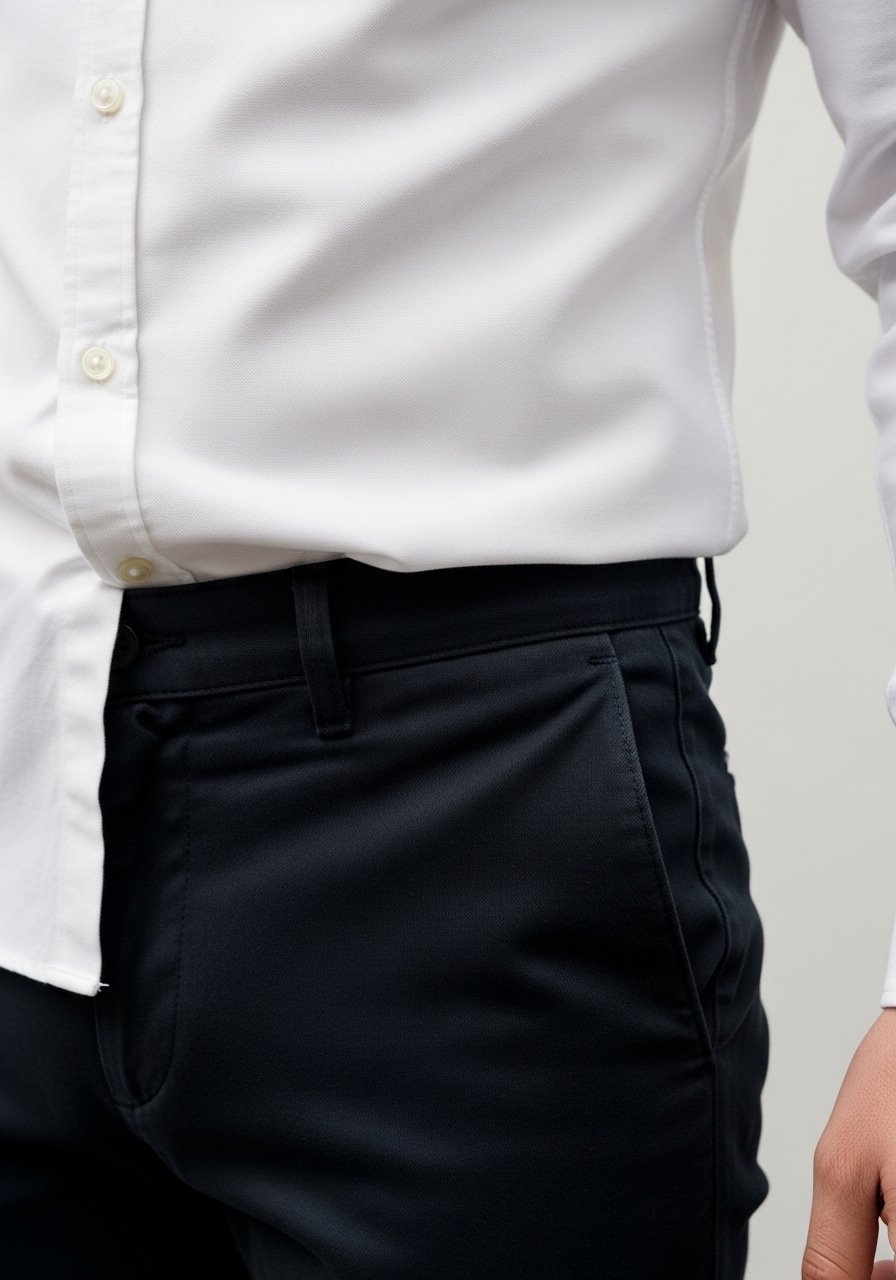
I begin with the shirt and pants because they set the silhouette. I want the shirt to skim the torso and the chinos to follow the line of my leg without clinging. Visually, this narrows the torso and lengthens the leg—my baseline for smart casual.
One insight I missed for years: a tiny pant break reads cleaner than no break or an overlong hem. A small mistake to avoid is tucking into pants that sit too low on the waist—everything looks sloppy.
Step 2: Choose one soft layer, not two competing ones
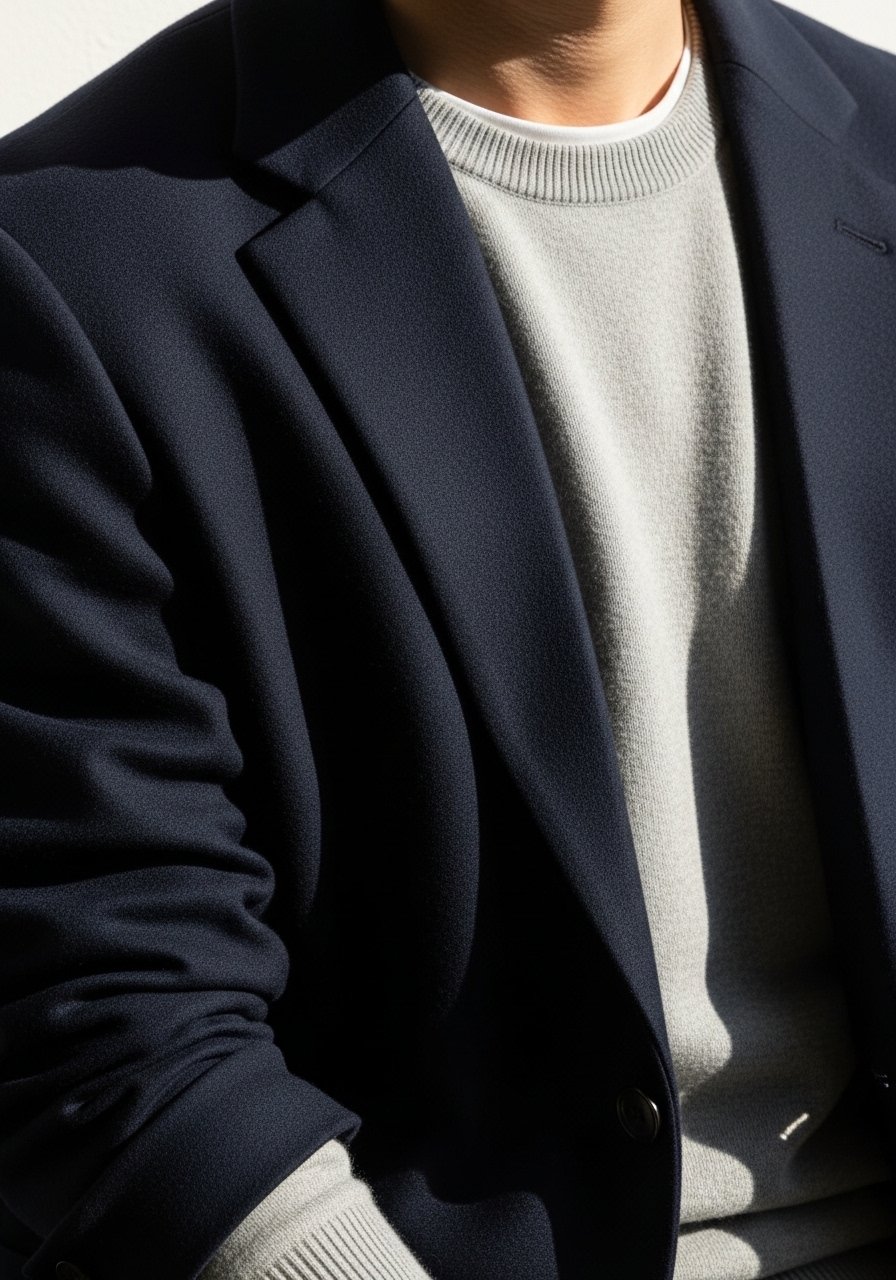
I pick either the merino crew or the unstructured blazer—not both at full structure. The sweater keeps things relaxed; the blazer adds polish while keeping shoulders soft. What changes visually is the outfit’s formality: sweater = casual-leaning, blazer = smart-leaning.
People often miss shoulder softness on blazers; too sharp a shoulder makes it suit-like. The slip-up I make is buttoning an unstructured blazer all the way—I usually leave it open for a relaxed line.
Step 3: Match shoe formality to the chosen top
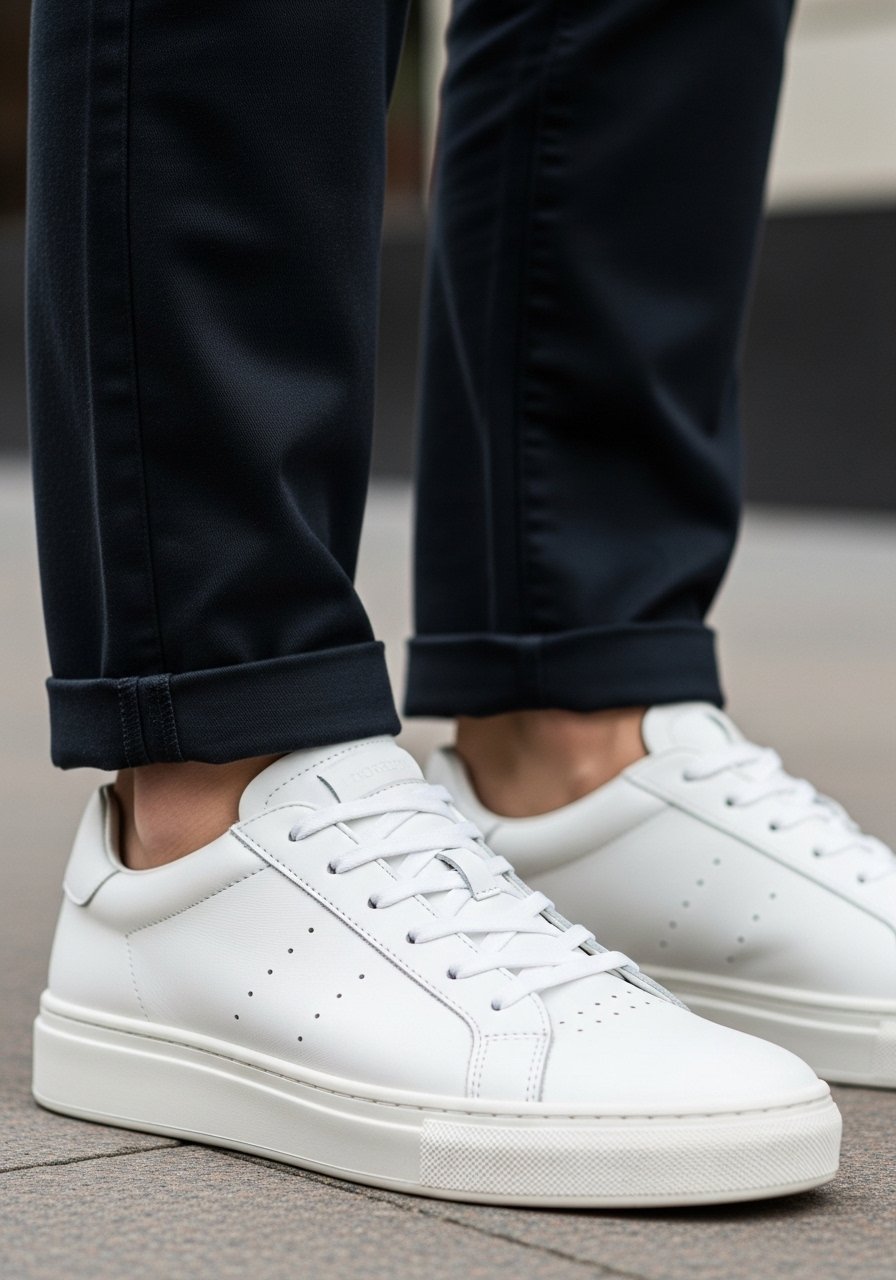
If I’m in a sweater or open blazer, I’ll reach for clean white sneakers. If I want a smarter read, I put on brown derby shoes. The shoes shift the whole outfit’s tone instantly; they anchor how others will read the look.
One insight I use: sneakers pair best with a slightly cropped hem or tiny cuff. The small mistake I avoid is wearing overly athletic trainers—the sole or logo pulls the outfit into casual territory.
Step 4: Keep accessories purposeful and muted
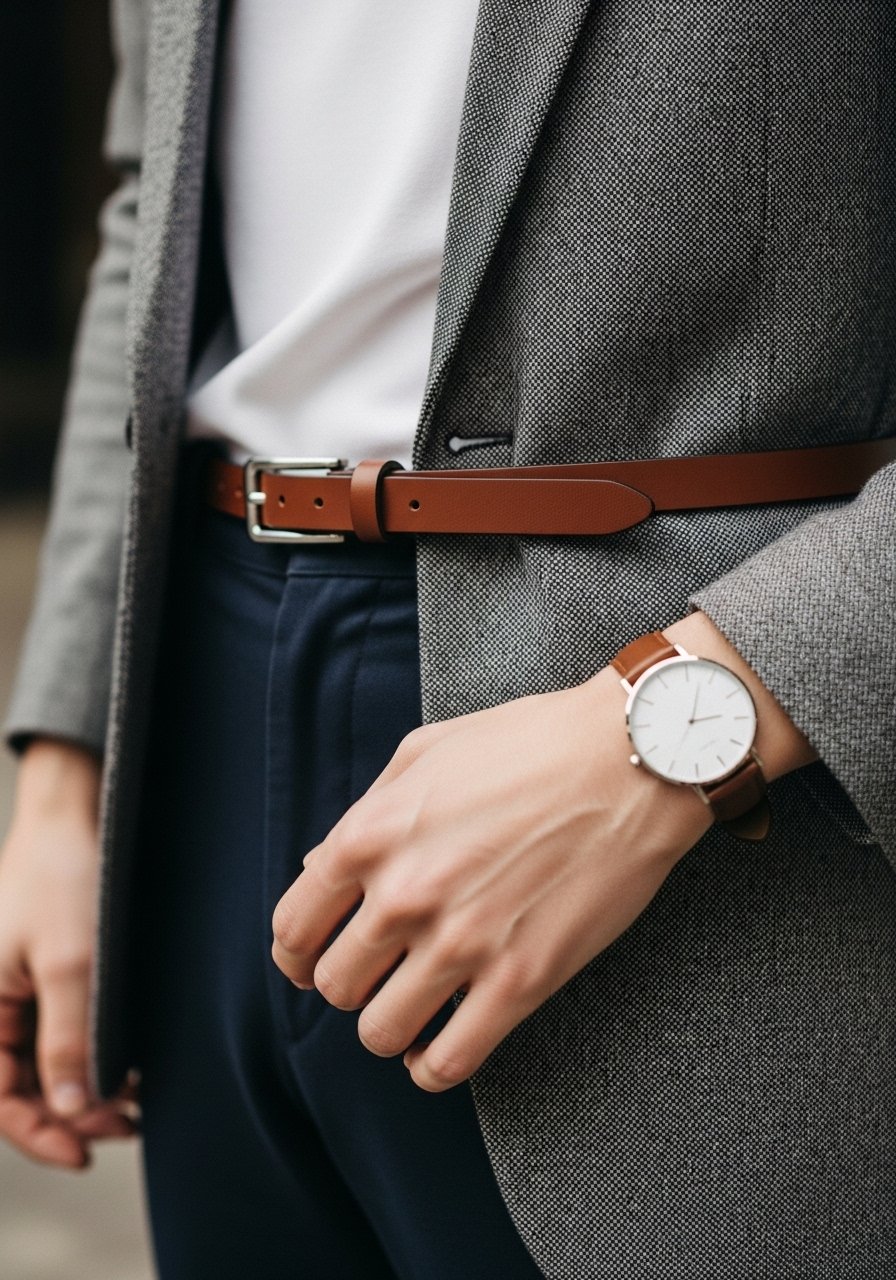
I match belt leather to shoe leather and add a simple watch. I rarely add a pocket square; if I do, it’s a soft linen one in a muted tone. This keeps the look intentional without being decorative.
People underestimate scale: big buckles or oversized watches break the calm. My usual mistake was stacking bracelets; now I stick to one small piece.
Step 5: Move, check, and tweak one detail
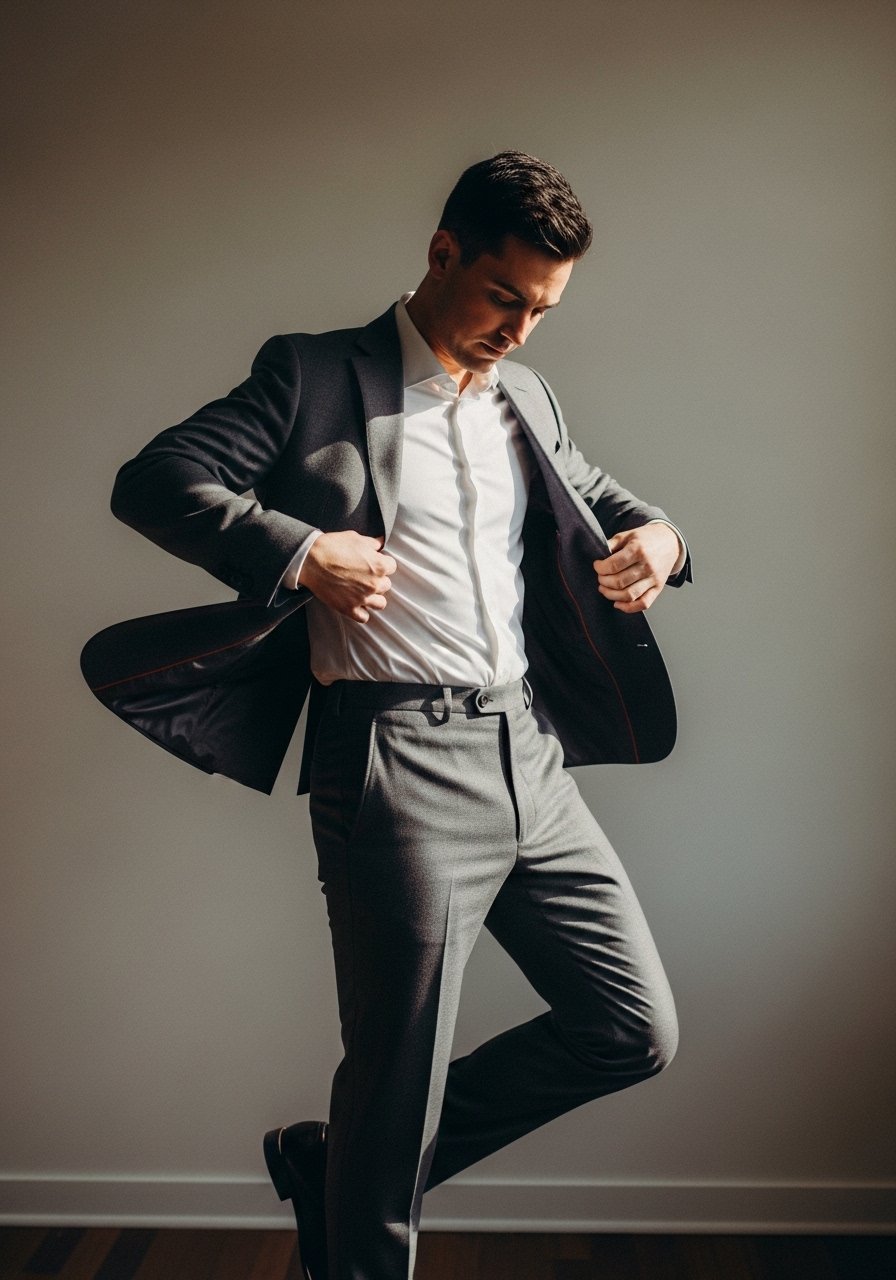
I put the outfit on, button and unbutton, sit and stand, lift my arms. I watch for pulling at buttons and fabric that bunches. This shows where the proportions are off and what needs a tweak.
An insight I use: motion reveals fit more clearly than mirror checks. The small mistake I correct most is over-layering—I remove the least necessary layer before leaving.
Common Fit Mistakes
I see the same errors: shoulders too wide, sleeves too long, and pants with too much break. These make even good pieces look sloppy. I check each point quickly in the mirror and during movement.
Quick checklist I use:
- Shoulders sit on my shoulder bone, not past it.
- Sleeve length shows a sliver of shirt cuff when I bend.
- Pant hem grazes the top of the shoe with a slight break.
Quick Outfit Templates
I keep three simple combos ready so I stop over-styling. They fit my day and mood and make decisions fast.
My go-tos:
- White Oxford + dark chinos + white sneakers + merino crew (casual-clean).
- Oxford + unstructured navy blazer + dark chinos + brown derbies (smart-casual).
- Tee + blazer + chinos + white sneakers (relaxed but intentional).
Final Thoughts
I start small and edit once. One clear rule—pick the outfit’s formality and don’t mix extremes—keeps things wearable. I trust the fit first, then the color and details.
Get into the habit of the motion check. It’s where I find the tiny fixes that stop an outfit from feeling off.
Leave a Reply